

Horse owners know that maintaining optimal hoof health is essential for their horse’s overall well-being and performance. Hoof care is, therefore, a crucial part of equine management. It ensures that issues like white line disease, seedy toe, and thrush don’t compromise your horse’s health. Our product, Hoof Mate, is specifically designed to support you in tackling these common hoof problems effectively. In this guide, we explore the best practices for hoof care and how Hoof Mate can be your go-to solution.
Understanding Common Hoof Problems
White Line Disease
White line disease is a fungal infection that affects the inner part of the hoof wall. It begins at the white line (the junction between the hoof wall and the sole) and can lead to hoof wall separation. This condition can cause severe lameness if left untreated. Regular hoof inspections and maintaining a clean environment are particularly vital for prevention.
Seedy Toe
Seedy toe, occurs when the hoof wall separates at the toe, allowing dirt and debris to accumulate. This creates an ideal environment for bacteria and fungi to thrive. The condition can weaken the hoof structure and cause lameness. As a result, regular hoof trimming and cleaning are essential to manage and prevent seedy toe.
Thrush
Thrush is a bacterial infection of the frog (the V-shaped structure on the underside of the hoof) which thrives in wet and dirty conditions. It can cause a foul odour, black discharge, and lameness. Proper hoof hygiene and regular cleaning can prevent thrush, but once it sets in, prompt treatment is necessary.
The Role of Hoof Mate in Hoof Care
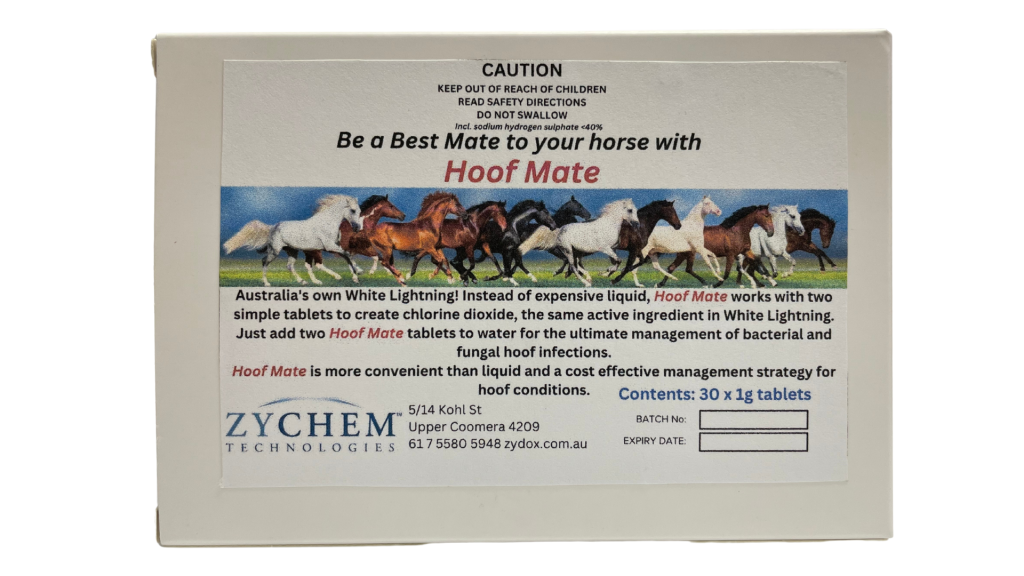
Hoof Mate is formulated to address these common hoof ailments effectively. Here’s how it works:
- Hoof Mate creates an effective antibacterial chlorine dioxide solution.
- Farriers and trimmers love Hoof Mate because, as a soak, it penetrates deep into your horse’s hooves.
- Regular application of Hoof Mate ensures all parts of the hoof remain clear of pathogens which prevents infection, in addition to supporting treatment of existing pathogens.
Best Practices for Hoof Care
To keep your horse’s hooves in top condition, follow these hoof care best practices:
- Regular Inspections: Inspect your horse’s hooves daily for any signs of abnormalities, such as cracks, unusual odors, or discharge. Early detection of these problems can prevent them from becoming severe.
- Proper Trimming: Schedule regular visits from a qualified farrier to keep your horse’s hooves properly trimmed and balanced. Overgrown or misaligned hooves can contribute to hoof problems.
- Clean Environment: Maintain a clean, dry environment for your horse. Wet and dirty conditions are breeding grounds for bacteria and fungi. Therefore, it is important to ensure stables and pastures are well-drained and clean.
- Balanced Diet: A balanced diet rich in essential nutrients supports overall hoof health. Ensure your horse receives adequate vitamins, minerals, and biotin to promote strong hooves.
- Use Hoof Mate Regularly: Incorporate Hoof Mate into your regular hoof care routine. Its preventive and therapeutic properties make it an especially invaluable tool in maintaining hoof health.
Investing in proper hoof care is investing in your horse’s future. Don’t horse around with your horse’s hooves. Hoof problems risk leg, bone and other injuries. So try Hoof Mate today and experience the difference it can make in your horse’s hoof health.
For directions see here
Order Hoof Mate now and give your horse the best hoof care possible!
Available Online now at the below sites
FAQs
Answer: White line disease is a fungal infection that affects the inner part of the hoof wall, specifically the white line area. It leads to separation of the hoof wall and can cause severe lameness if untreated. Regular hoof inspections and maintaining a clean environment are, unquestionably, crucial for prevention. Treatment often involves cleaning the affected area and applying agents like Hoof Mate.
Answer: Seedy toe, or hollow hoof, is characterized by:
- Separation of the hoof wall at the toe.
- Accumulation of dirt and debris in the separated area.
- Weakening of the hoof structure.
- Potential lameness or discomfort in the horse. Early detection through regular hoof inspections is crucial for effective management.
Answer: Treatment for seedy toe includes several steps. Firstly, thoroughly clean the affected area to remove dirt and debris. Next, have the damaged hoof wall trimmed to allow healthy growth. Then, apply antimicrobial and antifungal treatments like Hoof Mate to prevent infection. Finally, ensure regular farrier visits to maintain proper hoof balance and prevent recurrence.
Answer: Maintaining hoof health involves several key practices:
- Conduct daily inspections of your horse’s hooves.
- Schedule regular farrier visits for proper trimming and maintenance.
- Keep the living environment clean and dry to prevent infections.
- Provide a balanced diet rich in essential nutrients.
- Use preventive treatments like Hoof Mate to protect against fungal and bacterial infections.
Answer: Yes, a poor diet lacking in essential nutrients can negatively impact hoof health. Subsequently, ensuring your horse receives a balanced diet with adequate vitamins, minerals, and biotin will support strong and healthy hooves. Nutritional deficiencies can lead to weak hoof walls, making them more susceptible to diseases like white line disease and seedy toe.
Answer: You should clean your horse’s hooves daily to remove dirt, debris, and manure because these can lead to infections. This regular cleaning helps in early detection of any hoof problems in addition to maintaining overall hoof hygiene. Consequently, incorporating Hoof Mate into your cleaning routine adds an extra layer of protection against common hoof diseases.
Answer: Regular farrier care is crucial for maintaining proper hoof balance and preventing issues like overgrowth, cracks, and infections. A qualified farrier can detect early signs of hoof problems and provide necessary treatments and recommendations. Consistent farrier visits, undeniably, ensure your horse’s hooves remain healthy, strong, and functional.