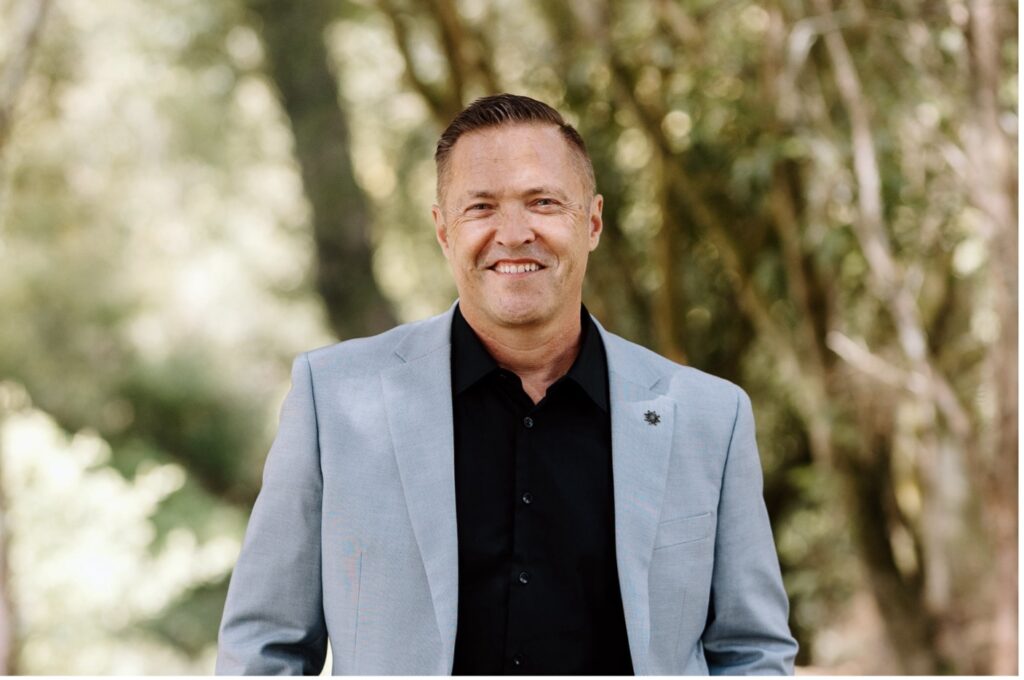
GFG Rural has been working with Zychem Technologies to supply and service customers in the Griffith NSW region. I sat down with Richard West, Managing Director, to learn more about how their business continues to grow to service in the Griffith area and how, at the core of their business, they are focused on providing top tier, honest, customer service to their clients and sourcing solutions to their problems. With a dedication to developing the next generation of leaders, GFG Rural and Griffith Feed and Grain are well placed and resourced to supply the Griffith region for years to come.
Zychem: Richard, could you share the story behind the inception of GFG Rural and Griffith Feed and Grain? How has the business grown to the organisation it is today?
Richard: Sure, I have been personally involved with the business for just under 10 yrs. I previously had been in the chicken industry and was looking for a change and was approached by the team at DB Ag. DB Ag is our parent company. DB Ag is a dryland farming company in this area that farms about 10,000 hectares. Back in the late 90s, they had made a decision to offset the risks associated with dryland farming by having a retail business here in Griffith. My fellow director, Matt’s mum, Phyliss, started up a business called Griffith Feed and Grain in 1997. It was a rural retail business that supplied produce, clothing, and pet supplies to this region. So, I joined the company just under 10 years ago and Phyllis decided she was getting towards retirement. I was subsequently instructed to grow the business.
So, we grew retail and, because of my chicken background, we were able to grow the business in the area of rodent baits initially. Then we gradually kept forging into new areas. Two years ago we broke our wholesale business away from Griffith Feed and Grain to form GFG Rural Supplies. It is GFG Rural Supplies that has the business relationship with Zychem. Over time the chlorine dioxide has grown and is now becoming a core part of our business.
Zychem: Reflecting on the early days, what were some of the initial challenges you faced, and how did you overcome them?
Richard: Something that is very important for our business are our customers. I know that that is a bit of a cliché, but we don’t have a lot of customers so we need to look after the ones that we’ve got. We work very, very hard to have a really solid, honest relationship with our customers. If things aren’t going so well, we’ll tell them. Rule one in life is not to give yourself an upper cut, but we find that in being open and honest with our customers we’ve developed some good really long-term solid relationships with our customers.
Zychem: Over the years, how has GFG Rural evolved in terms of products, services, and market reach?
Richard: I’m of the mindset that it’s important that business has focus and one of the key words that we talk about here is core business. Sometimes it can be very easy to chase after shiny things, so instead we do very much focus on core business. And our core business is rodent control, PPE and first aid, chlorine, chlorine dioxide and agricultural chemicals. So that’s our focus and we work on growing these areas. Every so often we will bolt something new on, but it’s a conscious decision to bolt a new product area onto the business. But generally we try to stay very focussed on our core areas.
Zychem: Can you discuss a pivotal moment or decision that significantly impacted the business’s growth trajectory?
Richard: I think it’s been a recent one in our relationship with Zychem. We previously worked with another business which we weren’t happy with. We‘re [GFG Rural] quite good relationship managers and servicemen, technically we’re not that good.
Now have come over to Zychem, we’ve found that the technical support from the business is unreal. So the relationship that we’re having is very exciting for us in that it’s opening up new opportunities. In terms of culture and knowledge and us having access to that technical information, has been extremely beneficial. We’re really quite excited about the business relationship [with Zychem] and the opportunities that it’s going to open up for us.
Zychem: One of the things we have found a lot is that each farm wants to do their own trial. Even if the farm down the road is using it and it’s working great, each farm wants to do their own trial.
Richard: And I think that’s where it comes back to that long game. If you support them and spend the time writing trial protocols, and helping them collect data, then that’s all a part of the process. That’s something that we can help them with.
Zychem: The agriculture industry heavily relies on strong relationships. How do you cultivate and maintain your relationships with suppliers and clients?
Richard: We’re quite practical people [GFG Rural], so probably the biggest way we maintain relationships with our customers is by providing good service. We often live by the motto, that if everybody’s happy operationally, it doesn’t go upstairs to the bosses. And if we don’t hear from them [the bosses], it’s quite good.
We’re not particularly good schmoozers, we’re just more about making stuff happen and we try and work very hard at doing that. So Graham Kirby [Pro Ten], I would see 2 or 3 times a year. However, his operational staff I work very closely with to achieve a good outcome so that all Graham ever hears is good things about what GFG Rural supplies is involved in.
Zychem: What value do you see, to GFG Rural and your clients, from stocking Zychem Technologies’ products?
Richard: Sure, I suppose in regards to the chlorine dioxide that you guys [Zychem] are supplying us with, we’re finding it very exciting. When I originally saw the product [DiPerox], I’m a bit of a skeptic, and I thought that because of the pricing that it was too good to be true. I begrudgingly trialled it on a farm and it performed as well, if not better than a product that’s selling at 4 times the price.
So, in our time now of 10 months of working with the product we have found that it gasses off less than the opposition, it has an as good, if not better, shelf life and it’s just, in general, a great product to work with. Once it’s mixed, chlorine dioxide is chlorine dioxide so I would suggest that the mixing process, the transport and the handling are the key things and we are finding it [DiPerox] an excellent, superior product at a cracking price.
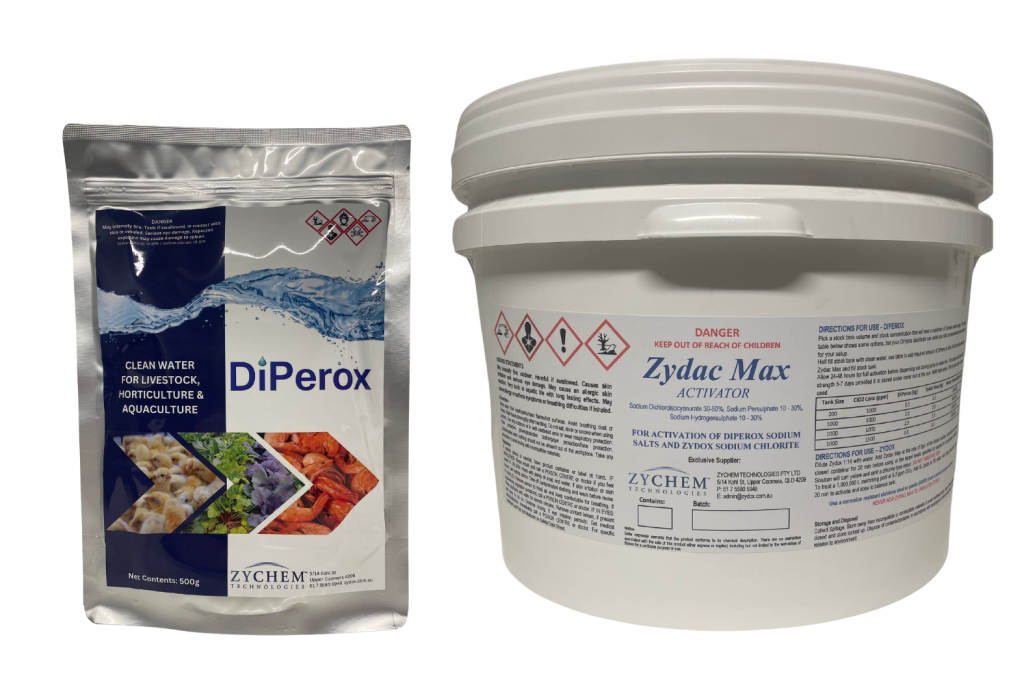
GFG Rural uses DiPerox and Zydac Max to create chlorine dioxide for their customers. To request information regarding options for your site click the relevant link below.
Zychem: Being part of the AIRR (Australian Independent Rural Retailers) group must have its advantages. How has this affiliation influenced Griffith Feed and Grain?
Richard: So, we’ve been working with AIRR now for, it happened prior to my time, so about 10 years. We have an AIRR account for both our businesses so Griffith Feed and Grain and GFG Rural. The great thing about AIRR is that particularly when you’re dealing in smaller quantities i.e. less than pallet lots. We’re able to purchase single items via AIRR at a locally, competitively placed warehouse. Our local warehouse is at Wagga which is only 2 hours away, so we can place an order today and have it here tomorrow. Their [AIRR’s] business is dealing with independent rural producers and they’re doing it very well, and done it so well that Elders bought them out. But again, we find we get very good service.
As well as providing fast service on individual products they are also able to provide cost effective service on larger orders. So for multiple pallet orders we can remain competitive in the marketplace. They are a cornerstone of our business that causes us no hassles. It is rare that there is a miss or a mixup with AIRR, they run a pretty tight ship, so they are very good business partner for us.
Zychem: Between Griffith Feed and Grain and GFG Rural there’s a wide range of products and services. How do you ensure the quality and relevance of your offerings to meet customer needs?
Richard: I suppose we’re fortunate in that we are a relatively small business. So even though I’m one of the directors of the company, I’m still very hands on, and we run a pretty tight ship. We have a good understanding of the performance of all of our business units and we’re very focussed on our performance. We’ve averaged 18% growth per annum over the last 10 years. So, I suppose that’s proof in the pudding that we must be supplying what are customers are looking for.
We have pursued some opportunities that haven’t worked, but we are prepared to admit that and we reverse away from them. We are always looking for organic growth so that we don’t over stretch ourselves. Going back to my earlier comment, making sure that we are focussed on the core businesses for GFG Rural and Griffith Feed and Grain. If we are going to step outside that core business, it’s a strategic decision.
For example, we did it a few years ago with fish food. We have a lot of Murray Cod farmers in this region and we saw an opportunity and they weren’t being serviced very well and so we stepped into fish food. But it was something that we planned for a few months and made a strategic step into, and bolted it onto our business. It’s worked quite well and it’s now part of our core business.
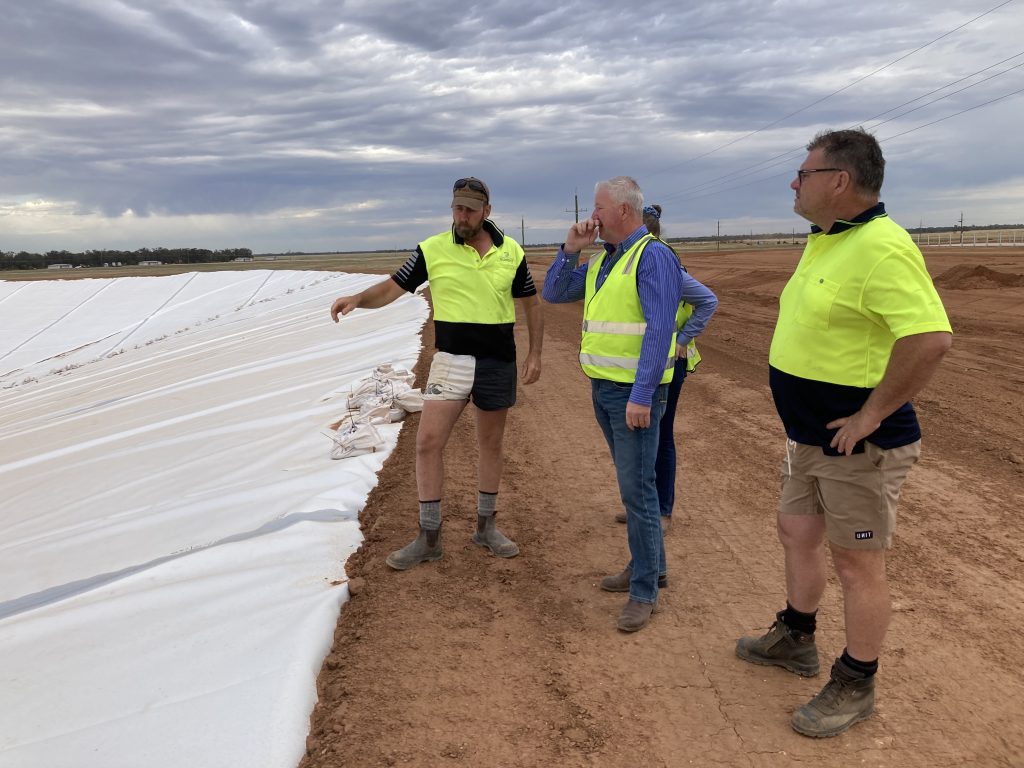
Zychem: Could you run us through the products and services you offer to the poultry industry in Griffith?
Richard: As I mentioned earlier, our first key thing that we supplied to the poultry industry was rodent baits. We saw that the local poultry were randomly buying them from rural resellers and at quite high margins. We saw competitors selling a 18kg bucket of rodent bait for $160-170 and we were able to come in under $100 with reasonable margins. And so it was our understanding of the industry which meant that we could do that. We did a good job of that and our customers were pleased with our performance in that area. The personal protective equipment (PPE) grew from there in that, again, they [the client] had something they felt was costing them too much money and we made a strategic decision to step into that.
As you know chickens require very clean water, so we then moved into the supply of chlorine. We supplied a number of poultry companies in the regions with chlorine. Then we made that strategic step into chlorine dioxide which we’ve now been doing for 5-6 years. So as a need has arisen, and we see that it fits with our business, we’ve stepped into that area which has facilitated our growth. And because of those good relationships with our poultry customers, they’ve supported us in that growth.
Zychem: With the water treatment that you offer to the poultry industry, you have a service component. Is that run through GFG Rural or is that a separate contractor?
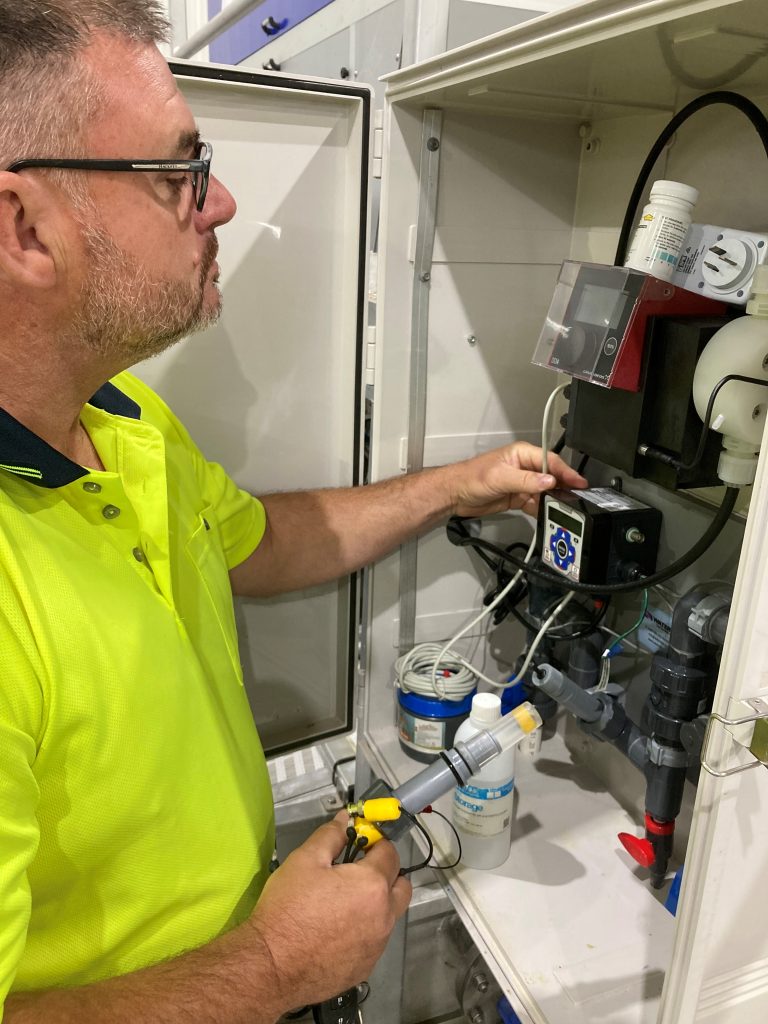
Richard: We partnered with Darren Goode about 12 months ago now. Darren is a contractor to our business who exclusively works for us. He has previously been an employee and a key part of our business. Darren has a very strong background in chlorine and chlorine dioxide dosing, so his knowledge of Grundfos pumps is exceptional. He’s a key partner.
We have the facilities to purchase and store, and he [Darren] has the expertise to be able to assist us with the supply of chlorine and chlorine dioxide. Just as importantly, Darren is able to service the reasonably complex dosing equipment that is associated with dosing both chlorine and chlorine dioxide.
Zychem: Local businesses often play a crucial role in their communities. In what ways does GFG Rural contribute to the local community or the wider agricultural sector?
Richard: We have a set of core values and one of our core values is that we are very family orientated and that community is important to us. So as part of our ESG policy, one of the key things that we do is about being engaged with the local community. As well as sponsoring and supporting horse-riding and a running club, we also want our employees involved so we have a club with Red Cross where we give blood. So all our team, every 6 weeks, head off down to the Red Cross van and we all give blood. We give blood as part of GFG and that’s something that employees seem to get a lot of pleasure from doing. We provide them with the opportunity to be able to duck out during their working hours.
Another thing that we have just implemented also is that once a month we are doing meals on wheels. So on the 3rdThursday of every month two of us from here [GFG Rural], and we take it in turns, will pop up to the hospital and collect the meals and will spend about 1.5 hours delivering meals to our elderly and disadvantaged people in the region. Again, it’s about us as a business giving back to the community, but also giving our employees the opportunity to enjoy that pleasure of giving as well.
Zychem: How did GFG Rural become involved with the meals and wheels service?
Richard: Trudy, my wife and have been delivering meals on wheels on weekends once a month and I shared it with the guys here and they were quite interested. So we’ve got it up and we do it once a month with work as well.
Zychem: You mentioned the term ESG just before, can you explain what that means?
Richard: We identified a few years ago that our corporate governance was becoming more important. It [ESG] stands for Environmental, Social and Governance policy. We developed the policy about 18 months ago and it’s something that’s constantly reviewed and shared with our employees. It’s about us doing the right thing.
So for example, under the environmental side, one of the key things now for the farm boys is that when they go and buy a tractor, while they like horsepower and all that sort of thing, they also need to look at fuel economy. They’re also required to have a look at a more environmentally appropriate option. Whether it be an electric spray unit, they’re expensive but they’re becoming a thing, or an electric tractor, so [the environmental impact] is important.
The social side is what we discussed before in us being engaged and in giving back to the community. And the governance is just about us having good processes. So that if we’re dealing with a large organisation and they look at us under scrutiny, we have good governance and good process within our business.
Zychem: How do you stay informed and adapt to the changing needs and trends within the agriculture industry?
Richard: I suppose I find reading as much as I possibly can. I also find that being a reasonably extroverted character I enjoy conversations. So I like talking to people like Lionel who are technically minded, he’s a fountain of information. It’s a matter of engaging and communicating with suppliers and customers to actively understand their needs. Isolation can be a problem here as far as accessing information. But with modern technology and communication it is possible to get out there and find information. You just have to work for it.
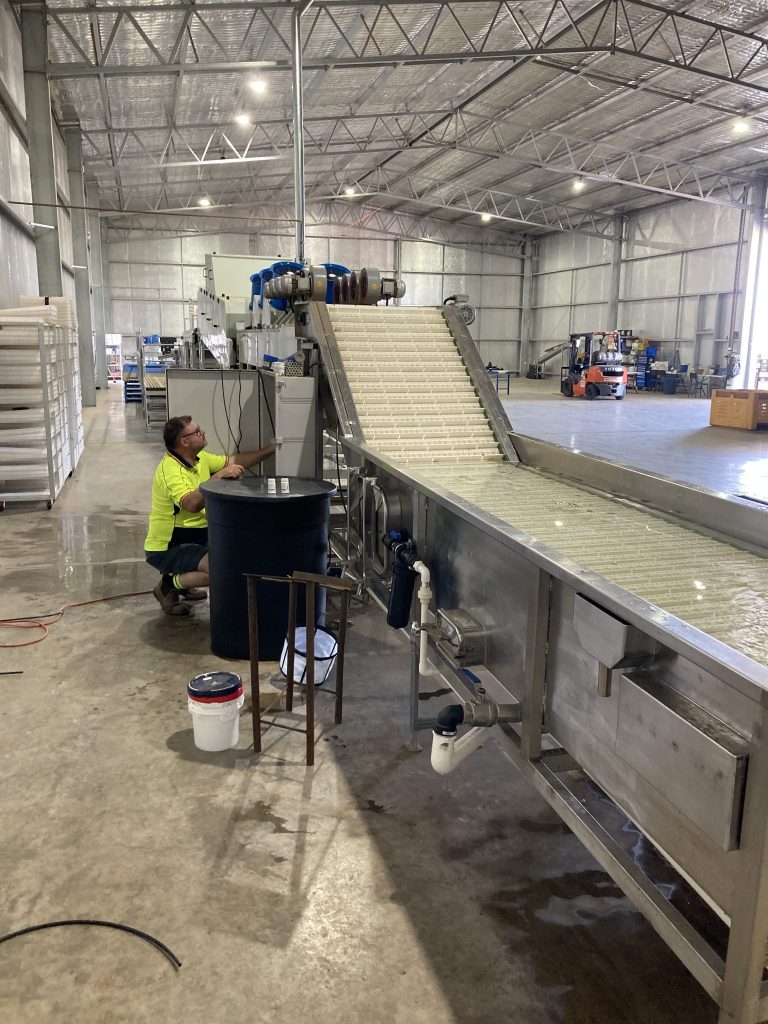
Zychem: Looking to the future, what aspirations do you have for GFG Rural? Are there any specific goals or milestones you aim to achieve in the next few years?
Richard: I suppose that given my age, retirement’s not that far away. So something that I’m very mindful of is handing the business over to the next generation. Because of this, we spend a lot of time with our staff. We have a leadership team within our business. Nicolette, is part of that program in that we have identified her as a leader for the future. It’s important that we develop our internal expertise with our employees and have them ready. As I said, I’m likely only in the workforce for another 10 years. I think that we need to keep growing and we need to stay focussed around that core business. And we need to keep doing what we’re doing well.
You know, at the moment we’re going through quite a growth period. Something that I’m very, very focussed on, and I’m a bit of a pain around here, is just making sure that everyone is following procedure and process. From experience, a growth period can be a great time for a stuff up so we’re being very careful.
Zychem: In an ever-evolving market, how does GFG Rural plan to innovate or expand its services to meet future customer and industry demands?
Richard: We maintain good contact with our customers and it’s about communication. You need to know what’s going on. Often with a number of our stronger customers, we’ve got a good enough relationship with them that if they have a need they’ll come to us about how there might be an evolution in an area, or a new need and we will work hard to service that.
For example, one of our chook farmers has a massive issue with European carp in one of their dams at the moment. It’s really a bit outside of our normal line of work. However, we have a close relationship with Murray Cod Australia. So I was able to ring our contact at Murray Cod Australia and obtain some information about how to control them and then how to get them out of the dams and then pass that back to our farmer. So, we’re about helping our customers in whatever way we can.
Zychem: Throughout your journey with GFG Rural, what have been some of the most valuable lessons you’ve learned. Particularly about business, leadership, and agriculture?
Richard: As a person that has been involved in corporate agriculture for most of my career, I‘ve found being in small business the most rewarding but the most stressful part of my career. So I’ve really enjoyed that part. I enjoy agriculture, I enjoy animals and producing animal products, I find it very interesting. So even though I did work in the chicken industry I’m still very happy that I’ve had all these experiences.
As for the lessons that I’ve learned, one of the key things is remaining focussed on core business. Focus on what you’re good at. Always look for other opportunities outside of that, but make a strategic decision to step into them, as opposed to falling into them. I think as far as moving into business, often ignorance is bliss. You look at something and because you don’t know much about it, it looks like a really good opportunity. Then once you get into it and understand how it works, it suddenly becomes a lot more complex and harder.
The other thing I’ve worked hard at is surrounding myself with good people. We are fortunate to have some amazing staff here and we work very hard to look after them. We also assist with their development so that we have leaders coming through for the future.
So GFG Rural and Griffith Feed and Grain will be in good hands in the future. Thanks so much for your time, Richard, it’s been great to chat and get some insight into your business.